
Dozens of companies now offer GLP-1 medications for weight loss, but not all providers operate with the same standards. When comparing GLP-1 programs, certain warning signs separate trustworthy providers from those cutting corners.
Red Flag 1: Pricing That Changes With Your Dose

Some programs advertise low monthly prices that only apply to starter doses. As your clinician increases your dose, costs can double or triple. A program advertising $149 per month might charge $349 at moderate doses or $449 at maintenance.
One reviewer on Trustpilot described their experience with a GLP-1 telehealth provider: “Personally I was told $199 for triz with no price increase...Then at requested refill, our cost raised to $399 a month.”
This pricing model makes budgeting impossible and may discourage patients from reaching therapeutic doses.
What to Look For
Transparent programs lock in consistent pricing regardless of dose. Look for programs that publish pricing at all dose levels upfront, with no surprise charges as your dose increases.
Red Flag 2: No Transparency About Pharmacy Partners

When programs refuse to name pharmacy partners or provide sourcing details, that raises concerns. Some use vague language like “partner pharmacies” without identifying facilities or disclosing whether they work with state-licensed 503A compounding pharmacies or FDA-registered 503B outsourcing facilities. This leaves you with no way to verify quality standards or confirm proper licensing.
What to Look For
Responsible providers clearly identify pharmacy partners and explain quality assurance processes. Look for programs that name their pharmacy partners, list facility accreditations (NABP, PCAB, ACHC), and explain quality control procedures.
Red Flag 3: Customer Service That Disappears When You Need It

Many programs look great until you need help. Some limit communication to email-only support with 48-hour response times. Others use ticketing systems that route questions through multiple representatives or allow provider access only during business hours.
A Trustpilot review of one online GLP-1 weight loss program described the frustration: “Poor customer service, lag times getting back to you...they only have responded to 1 email about dosage but not about the defective vial of medication.”
What to Look For
Programs built for long-term success provide multiple channels for timely communication with medical professionals. Look for 24/7 support availability and same-day consultation options that prioritize human interaction over automated systems.
Red Flag 4: Restrictive Cancellation Policies With Hidden Fees

Comparing GLP-1 programs also means reading the fine print on cancellation. Some programs make signing up easy but canceling difficult. They require 30-day advance notice or charge cancellation fees ranging from $50 to several hundred dollars.
Reviews on Trustpilot describe discovering these fees only after attempting to cancel. One reviewer of a compounded GLP-1 therapy program stated, “Now they want to charge me $88 cancel fee.” Another reviewing a different telehealth weight loss provider reported being charged a “$100 cancellation fee” without adequate notice.
What to Look For
Patient-first programs allow straightforward cancellation without fees or lengthy notice periods. Look for clear statements about no cancellation fees and no long-term contracts.
Red Flag 5: Vague or Misleading Claims About Medication

Following recent FDA enforcement actions, programs making questionable claims about compounded therapies should trigger skepticism. Warning signs include claiming compounded products are “generic versions” of FDA-approved drugs, stating they “use the same active ingredient” without proper context, or implying they are “clinically proven.”
What to Look For
Responsible programs provide clear, accurate information about medication types and regulatory status. They distinguish between FDA-approved brand medications and compounded therapies, explain when each option may be appropriate, and include required disclosures.
How Eden Addresses All Five Red Flags
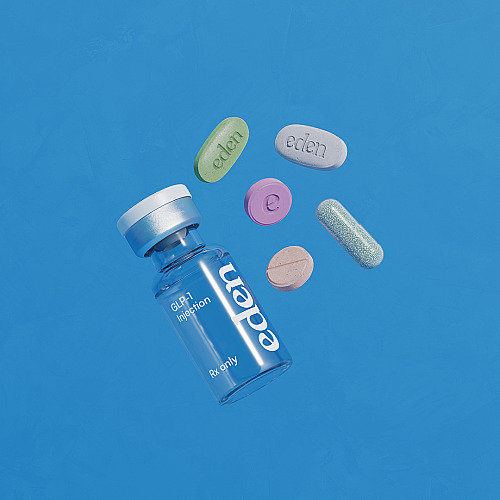
When comparing GLP-1 programs against these red flags, Eden GLP-1 Weight Loss Program takes a different approach, building its program around transparency to address each of the red flags outlined above.

Consistent Pricing
Eden pricing follows a straightforward membership-plus-medication structure:
Eden Membership: $39 for the first month, then $99/month
Compounded semaglutide: $99/month (with active membership)*
Compounded tirzepatide: $199/month (with active membership)*
The medication price stays the same at every dose, with no long-term contracts and no cancellation fees.
Named Pharmacy Partners
Eden operates its own in-house compounding facility, Eden Pharmacy, serving members across 25 states, with pharmacy operations led by Rebecca Emch, PharmD, VP of Pharmacy Operations, who brings 17+ years of pharmaceutical experience in non-sterile compounding, functional medicine, and regulatory compliance.
Prescriptions are also fulfilled through a network of U.S.-licensed 503A partner pharmacies: GoGoMeds, Precision, Enovex, and AbsolutePharmacy. All facilities hold NABP, PCAB, ACHC, and LegitScript certifications and perform third-party testing through FDA registered laboratories for every compounded lot.
24/7 Customer Support
Eden membership goes beyond medication access. Every member gets the following:
Dedicated Care Team: A personal care team available anytime for questions, guidance, and ongoing support
Member Experience Consultation: A one-on-one session with a Member Experience Specialist to align your care plan with your goals
Private Health Hub: A secure portal to manage treatments, message your provider, and track your progress
Access to the Eden Collective: A private member community to connect and find encouragement from others on a similar path
Everything is available 100% online, with no in-person visits required.
No-Fee Cancellation
Members cancel directly through their patient portal or by emailing [email protected] with no cancellation fees, no advance notice required beyond the current billing cycle, and no contracts.
Clear Medication Information
Eden offers both FDA-approved brand medications and compounded GLP-1 therapies and is transparent about the distinction between the two. Every page about compounded therapies states clearly, “Compounded medications are not approved by the FDA and have not been reviewed for safety, effectiveness, or quality.”
Making Your Decision

Comparing GLP-1 programs requires looking beyond advertised prices and marketing promises. The five red flags outlined here represent systemic issues that compromise safety, transparency, or patient autonomy.
When evaluating any program, check for transparent pricing at all dose levels, named pharmacy partners with verifiable credentials, responsive support, flexible cancellation, and accurate medication information with proper disclosures.
Skip the red flags.
*Price includes medication only, if prescribed. An active Eden Membership is required ($39 for the first month, auto-renews at $99/month thereafter). Membership does not include or guarantee a prescription. Medication is not available without a membership. Membership fee is not included. Compounded medications are not approved by the FDA and have not been reviewed for safety, effectiveness, or quality. Compounded medications are not FDA-approved and may be prescribed only when clinically appropriate. Results may vary. Individual outcomes depend on multiple factors, including diet, exercise, and adherence to treatment plan. Only available if prescribed after an online consultation with a healthcare provider. All details were verified at the time of publication and are subject to change without notice. This content is for informational purposes only and does not constitute medical advice. Consult a qualified healthcare provider before starting any weight loss program.






Leave a Comment
Your email address will not be published. Required fields are marked *